
Can Filing Bankruptcy Stop Wage Garnishment in Broward County, Florida?
The simple answer is yes, in many cases it can.
Many people in Broward County, Florida, ask the same question: Can Filing Bankruptcy Stop Wage Garnishment?
If your paycheck is smaller because money is taken out each payday, you may have wage garnishment. This can make it very hard to pay rent, buy food, pay utility bills, or take care of your family.
However, every financial situation is different. The type of debt you have and the type of bankruptcy you file can affect what happens.
Wage Garnishment Explained Under Florida Law
Wage garnishment is a legal process. It lets a creditor take money from your paycheck after a court judgment. Instead of paying the creditor yourself, your employer must take part of your wages and send it to the creditor.
In Florida, wage garnishment is controlled by state law. However, not every paycheck can be garnished, and not every person is treated the same. Florida provides strong protections for many workers.
One of the most important protections is the Head of Family Exemption. If you provide more than half the financial support for a child or other dependent, your wages may be protected. This depends on your income. It also depends on whether you agreed in writing to garnishment.
What Income Is Protected in Florida?
Certain types of income are generally protected from garnishment under federal or Florida law. These may include:
- Social Security benefits
- Supplemental Security Income (SSI)
- Social Security Disability Insurance (SSDI)
- Veterans benefits
- Workers’ compensation benefits
- Unemployment benefits
- Most retirement and pension benefits
- Child support received
- Some public assistance benefits
These protections help ensure that people can still meet their basic living needs.
When Can Wages Be Garnished in Florida?
A creditor usually must first sue you in court and win a judgment before your wages can be garnished. After the court issues a wage garnishment order, your employer must withhold part of your paycheck and send it to the creditor.
However, some debts do not require a court judgment before wage garnishment can begin. These may include:
- Child support
- Spousal support (alimony)
- Certain unpaid federal taxes
- Some federal student loans
These debts are governed by different laws and may have special collection rules.
If your wages are already being garnished, filing for bankruptcy may stop many wage garnishments. It can stop them through the automatic stay. However, bankruptcy does not usually stop garnishment for child support, alimony, or certain tax obligations.
Understanding Florida’s wage garnishment laws can help you know your rights and decide the best way to protect your income.
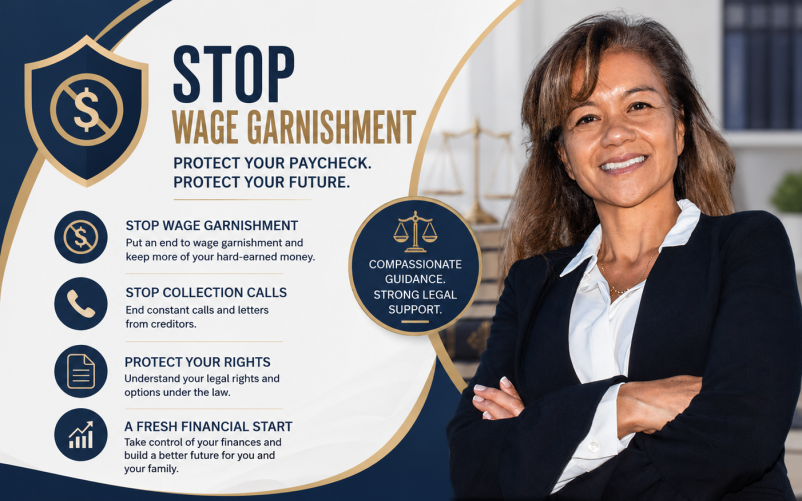
Can Filing Bankruptcy Stop Wage Garnishment in Florida?
The simple answer: In many cases, Can Filing Bankruptcy Stop Wage Garnishment is answered with yes.
When you file for bankruptcy, something called an automatic stay usually goes into effect immediately.
The automatic stay is a legal order that tells most creditors to stop trying to collect money from you.
This often includes:
- Wage garnishments
- Collection calls
- Collection letters
- Lawsuits
- Bank levies
- Some foreclosure actions
- Some repossession actions
If your wage garnishment is for a debt covered by bankruptcy, your employer must usually stop withholding money. They must stop after they get notice of your bankruptcy filing.
What Is an Automatic Stay?
The automatic stay is one of the biggest benefits of filing bankruptcy. It starts automatically after your bankruptcy case is filed.
Think of it as pressing a “pause” button on many collection activities. It gives you time to organize your finances without constant pressure from creditors.
For many families, this means finally receiving a full paycheck again.
Which Bankruptcy Chapters Can Stop Wage Garnishment?
The two most common types of personal bankruptcy are Chapter 7 and Chapter 13.
Chapter 7 Bankruptcy
Chapter 7 is often called liquidation bankruptcy. It may help eliminate many unsecured debts, such as:
- Credit card debt
- Medical bills
- Personal loans
If your wage garnishment is based on these types of debts, Chapter 7 may stop the garnishment.
Not everyone qualifies for Chapter 7 because income limits and other legal rules apply.
Chapter 13 Bankruptcy
Chapter 13 is a repayment plan. Instead of eliminating all debts immediately, you make affordable monthly payments over several years.
Many people choose Chapter 13 because it helps them:
- Catch up on missed payments
- Protect valuable property
- Stop wage garnishment
- Manage debt in a more organized way
What Types of Wage Garnishment May Not Stop?
Although bankruptcy helps many people, it does not stop every type of wage garnishment forever. Some debts receive special legal treatment.
Examples may include:
- Child support
- Alimony
- Some recent taxes
- Certain student loans
- Some criminal fines
These debts often continue even after bankruptcy. This is why it is important to know exactly what type of debt caused the garnishment.
Final Thoughts
So, Can Filing Bankruptcy Stop Wage Garnishment?
For many people, the answer is yes. Bankruptcy can often stop wage garnishment with an automatic stay. This gives you relief from collection efforts. It can help you regain control of your finances.
Need Help to Stop Wage Garnishment in Broward County, Florida?
If you are trying to Stop Wage Garnishment in Broward County, Florida, Nemia L. Schulte may be able to help. With experience in bankruptcy and debt relief, Nemia L. Schulte knows wage garnishment can be very stressful.
Whether you are considering Chapter 7 or Chapter 13 bankruptcy, you can get clear guidance on your legal options.
Contact Nemia L. Schulte today. Schedule a free consultation to learn if bankruptcy is right for you. You can also ask about other debt relief options.